Structured Essay Practice for Fordham's July Bar Takers
Prepared for Fordham University School of Law
SHEP is a timed essay practice platform that delivers rubric-scored feedback within 20 seconds of submission. The methodology is grounded in active recall and retrieval practice: students write under exam conditions, receive immediate corrective feedback, and revisit weak rules through spaced repetition drills. Research consistently shows that testing with prompt feedback produces stronger long-term retention than passive review alone.
The grading engine evaluates each essay across five dimensions: issue spotting (which issues the student identified and which they missed), rule accuracy (whether rule statements are correct and complete), fact application (whether specific facts are tied to specific legal elements), organization (IRAC structure and logical flow), and essay polish (readability under grader time pressure). A Rules Map tracks rule-level mastery across all subjects, updating after every essay to show exactly where each student needs to focus.
What This Includes
For Your Students
- Unlimited timed essay practice with instant rubric-scored feedback
- Per-issue scoring: spotted, missed, and partially addressed
- Rules Map showing mastered vs. weak rules across all subjects
- Targeted repair drills delivering black-letter rule statements for weak areas
- Upload questions from Themis, Barbri, or any authorized source
- PDF printouts of graded essays for review with advisors
For Your Office
- Admin dashboard: who is practicing, how often, and score trends
- Cohort-level progress monitoring and intervention signals
- End-of-cycle usage report
- 25-minute kickoff session for your students
- Direct line to the founding team for support
Student Feedback
"I like fast grading ... [t]hank you for working on this app to help others."
Iryna, LL.M. retaker
"The repetition of the rules is amazing. I paid and signed up. It is really good."
Intesar, retaker
"This is amazing."
Cuong, retaker
Pricing
Institutional rate: $129 per seat (standard individual price is $229). Includes admin dashboard, usage reports, kickoff session, and support through July 28, 2026. Fordham distributes access code FORDHAM26.
The Team
Sanoj Allen,
Founder
Fordham University School of Law, J.D. · Brown University, B.A. in English and Music. Eight years of professional experience.
William Groves,
Co-Founder
Brown University, B.S. in Computer Science. Software Engineer at Google. Designed and built the grading engine and platform architecture.
265+ essays scored to date · 20-second feedback time · Zero reported grading errors on rule accuracy
SHEP is an independent study tool, not affiliated with NCBE or any board of bar examiners.
The Student Experience
The screenshots below show the core workflow: practice, receive feedback, identify weak rules, and drill them.
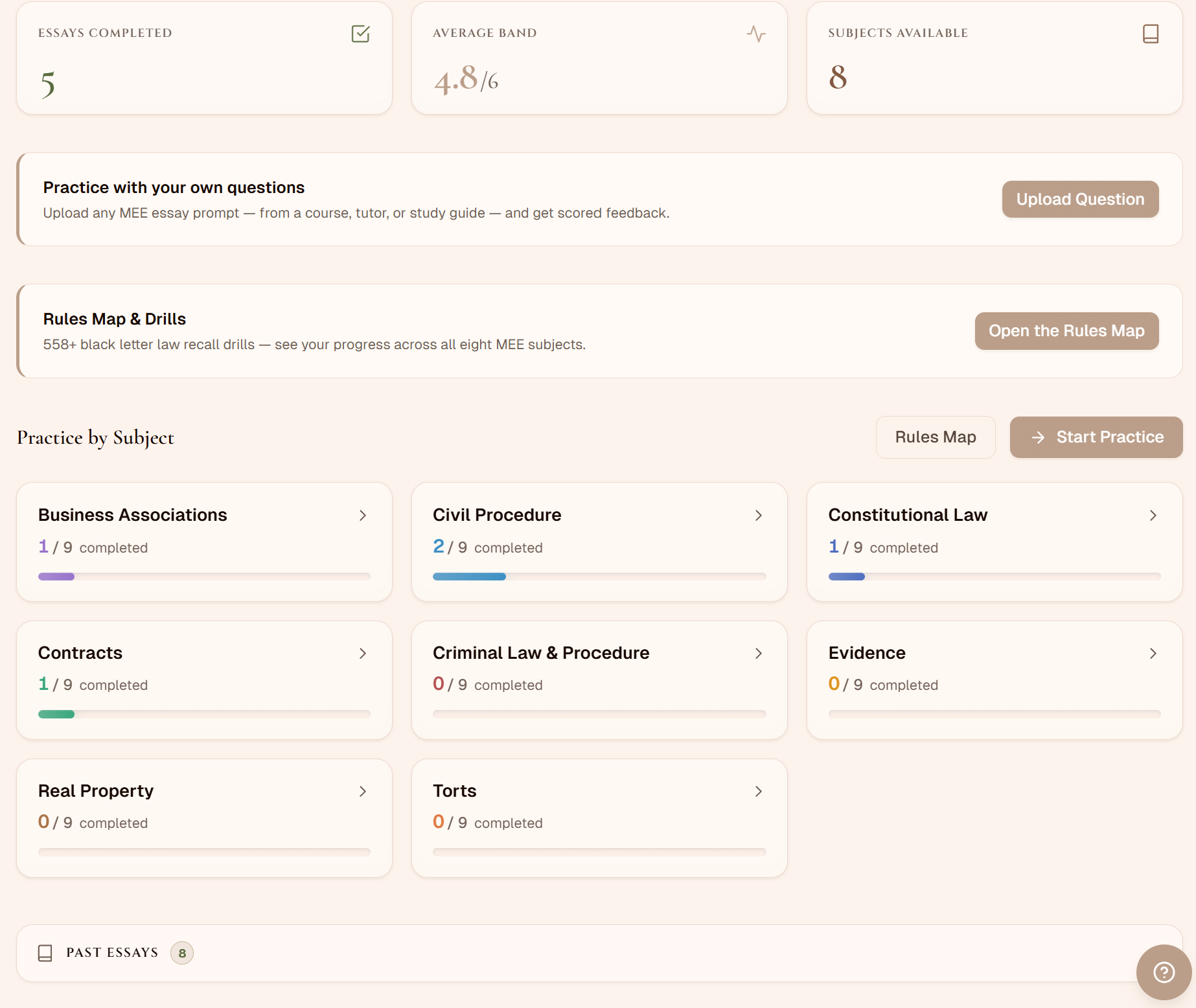
1. Practice Dashboard
Students see essays completed, average band score, and subjects available. Each subject card tracks progress. Students can also upload their own prompts from Themis, Barbri, or any authorized source.
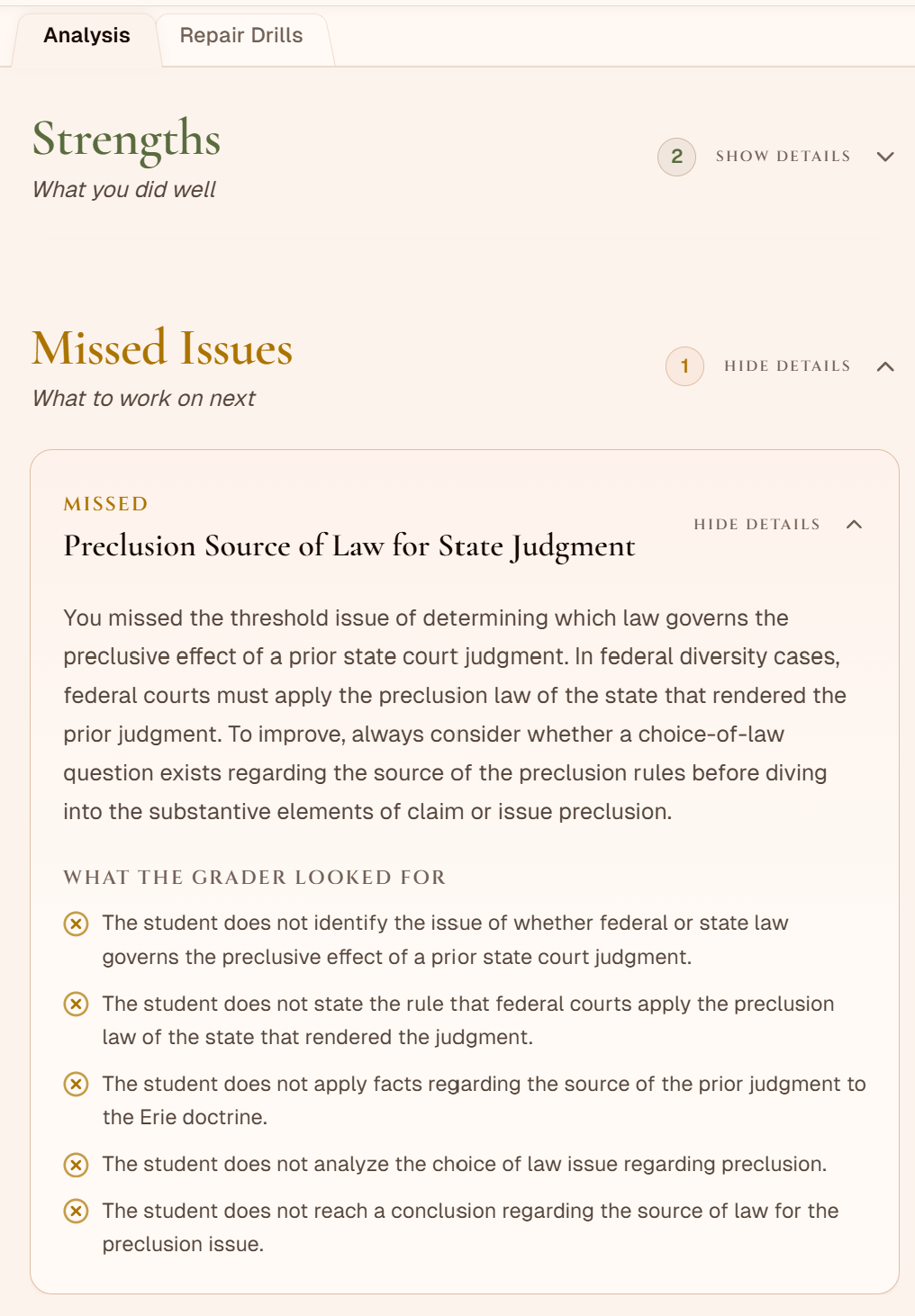
2. Issue-Level Analysis
Each issue is classified as spotted or missed. Missed issues show what the grader looked for, the applicable rule, relevant facts from the prompt, and why the student's analysis fell short.
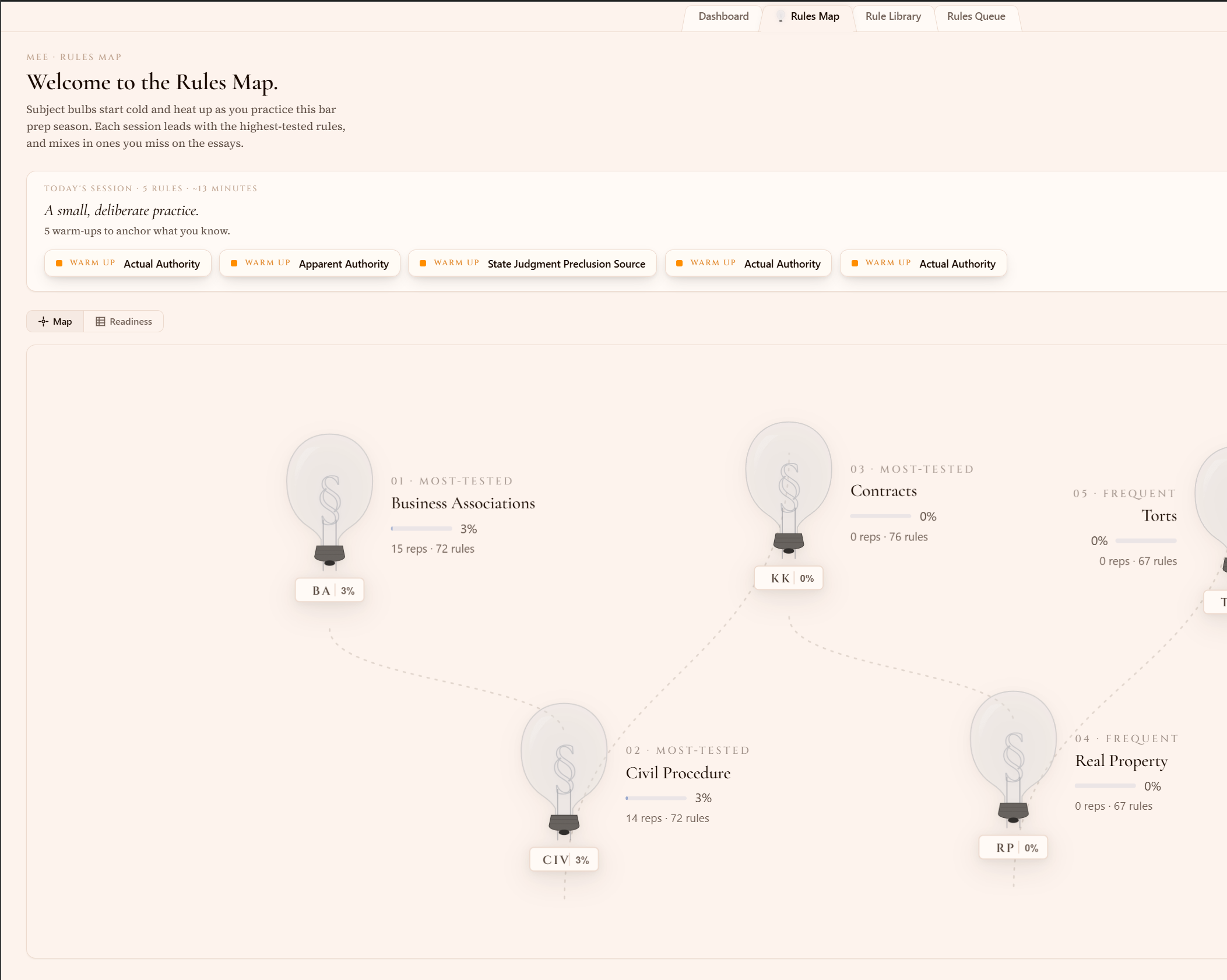
3. Rules Map
A visual map of rule mastery across all subjects. Rules start cold and heat up with repeated testing. Each node shows the number of rules encountered and the student's current coverage percentage.
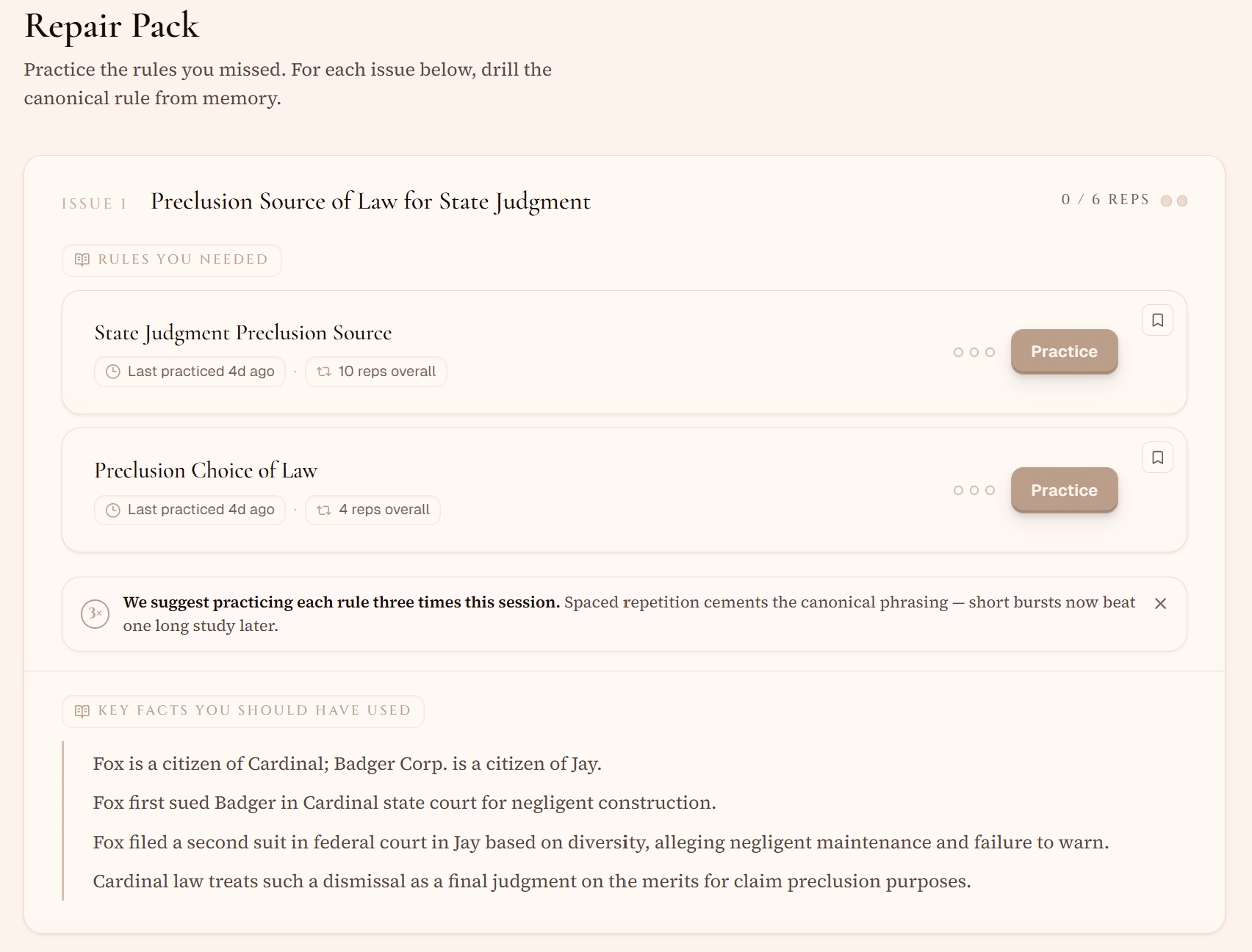
4. Repair Drills
After each essay, a repair pack targets the specific rules the student missed. Students drill the canonical black-letter rule statement through spaced repetition until recall is automatic.
What Students Receive After Every Essay
Each submission produces four layers of feedback, delivered within 20 seconds.
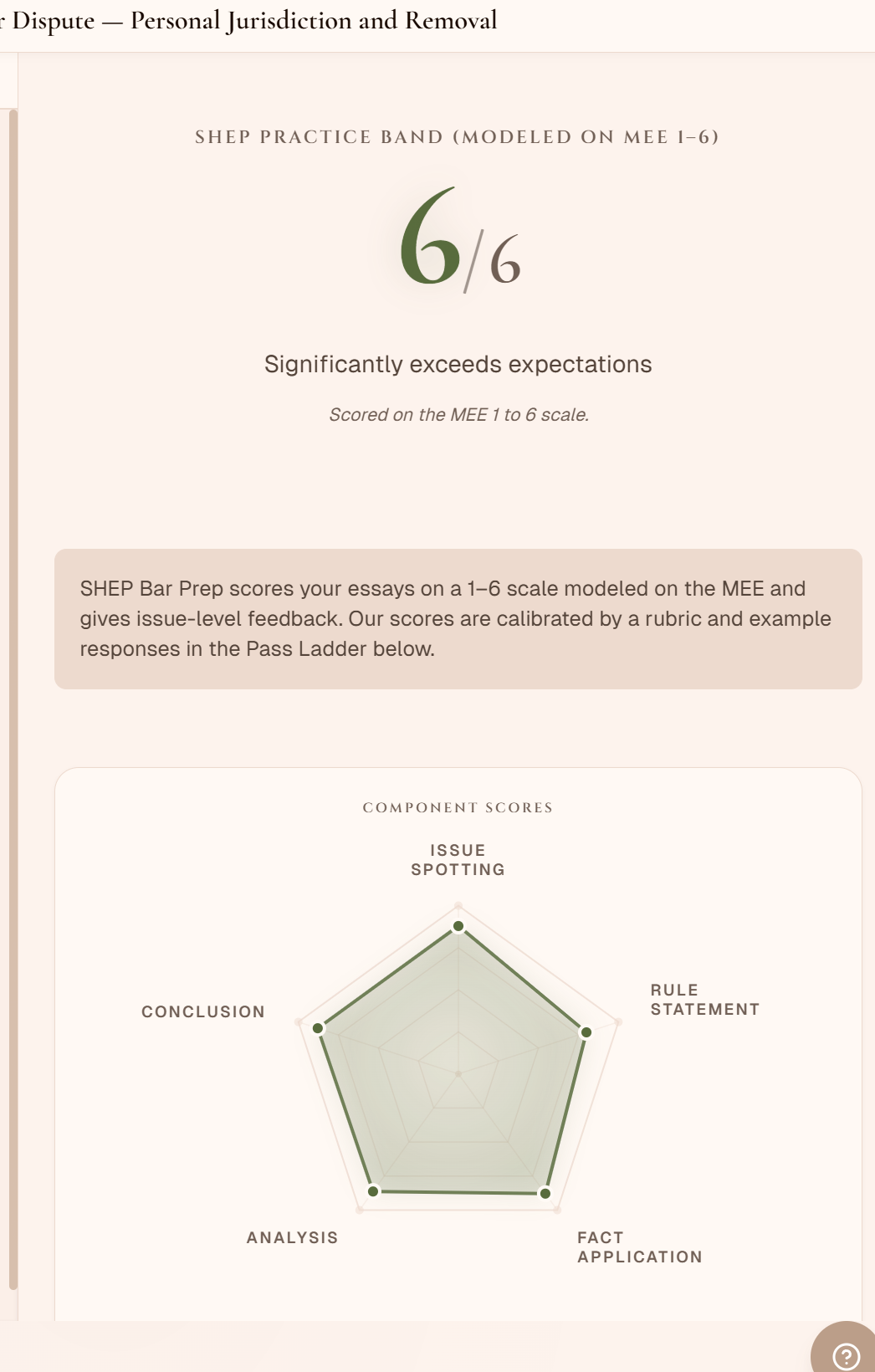
Component Scores
A radar chart scores each essay across five dimensions independently: issue spotting, rule statement accuracy, fact application, analysis depth, and conclusion strength. Over multiple essays, patterns emerge and students see exactly which dimensions need work.
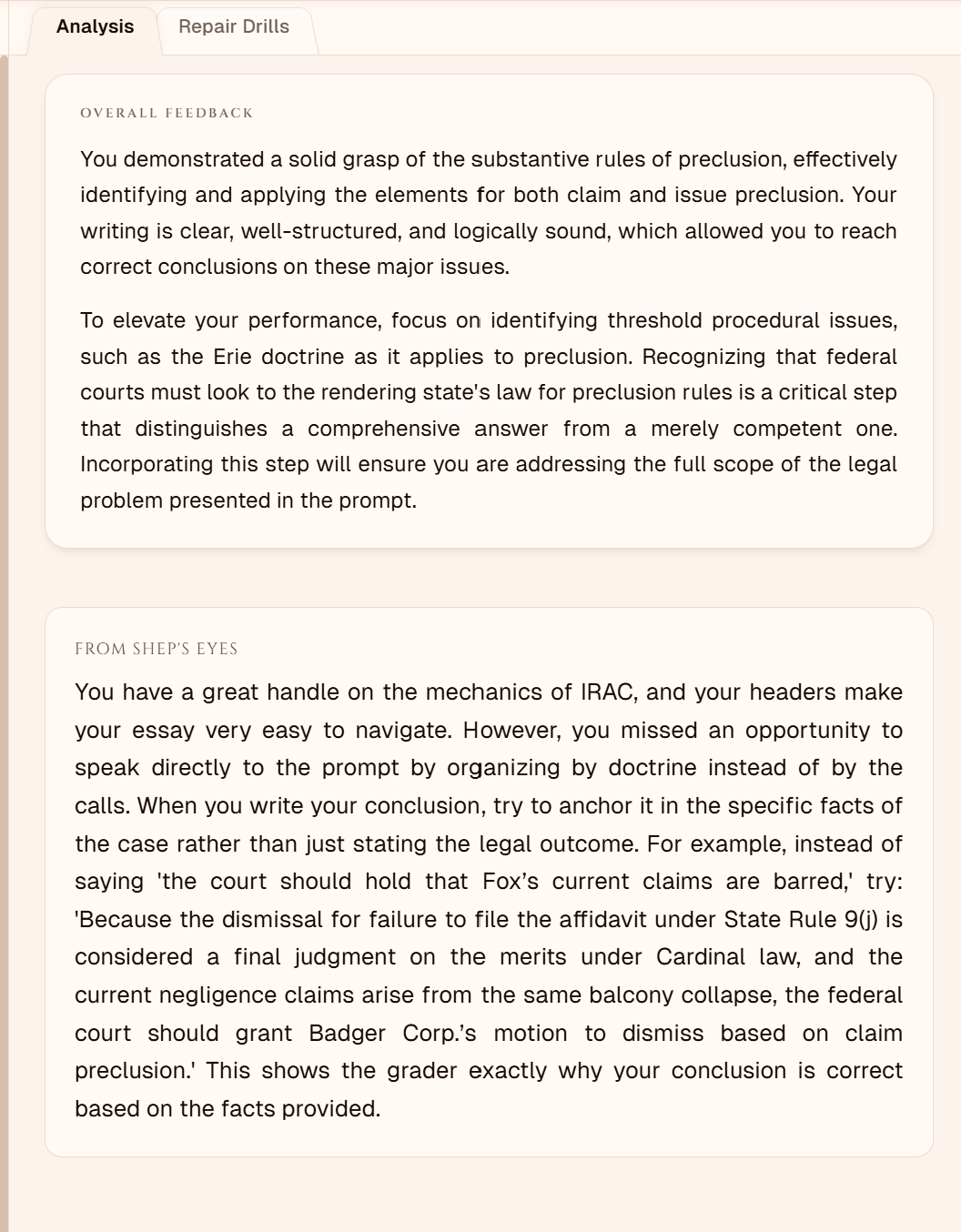
Overall Feedback
A written assessment of the student's grasp of the substantive law, the quality of their legal writing, and specific areas to elevate their performance. Identifies what distinguished their answer and what would move it from competent to comprehensive.
From SHEP's Eyes
Targeted coaching with concrete examples drawn from the student's own essay. Shows exactly how to rewrite weaker sections by referencing specific facts and rules from the prompt. Not generic writing tips.
Issue-Level Breakdown
Every legal issue in the prompt is classified as a strength, needs work, or a miss. For each missed issue, the student sees the governing rule, the specific facts that triggered it, and why their analysis did not reach it. This is the level of feedback that typically requires a human tutor.